Darkness is a biological signal
Your body does not sleep just because the clock says so. It sleeps because the environment tells it to. Darkness triggers melatonin, the hormone that prepares you for rest and keeps your sleep cycle steady night after night.
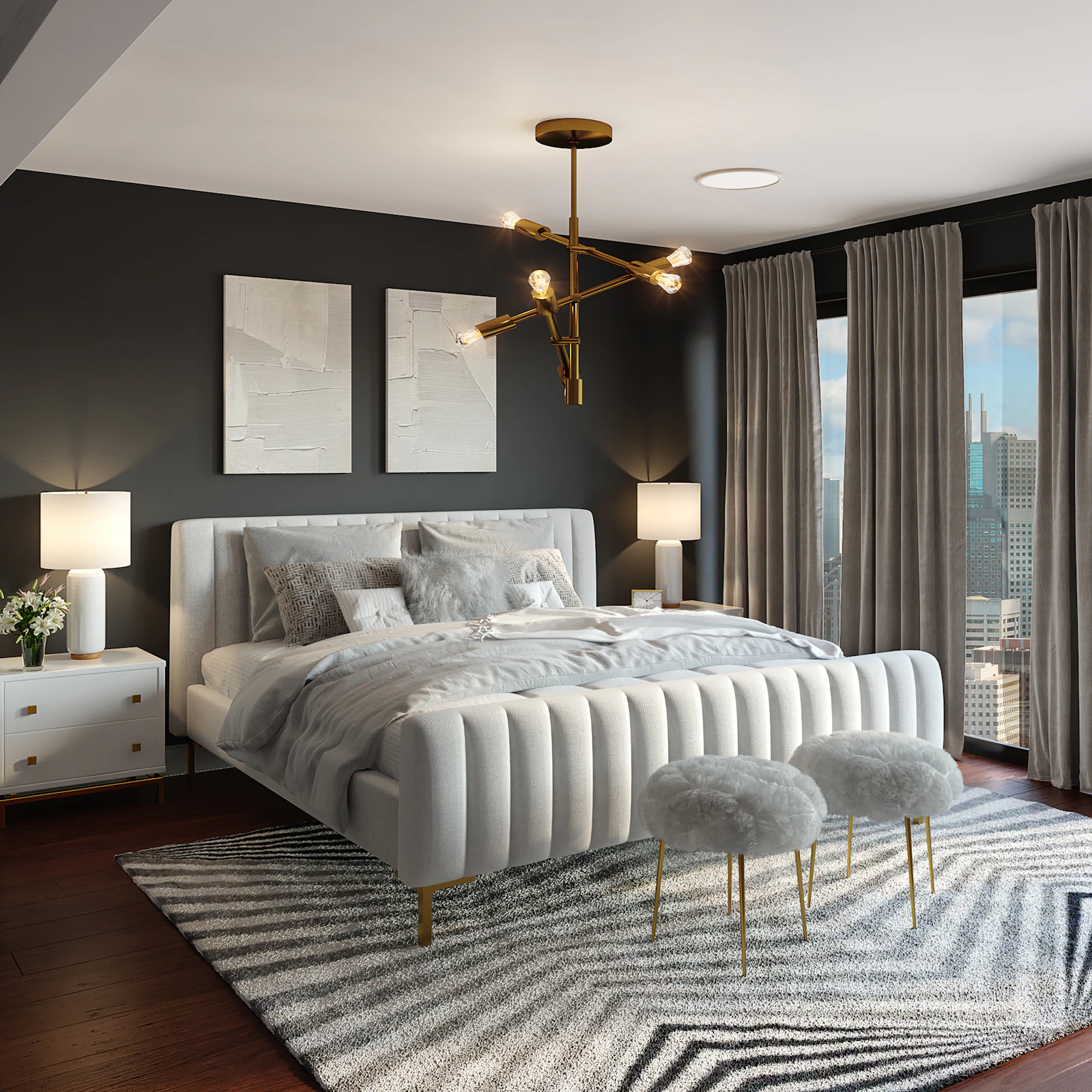
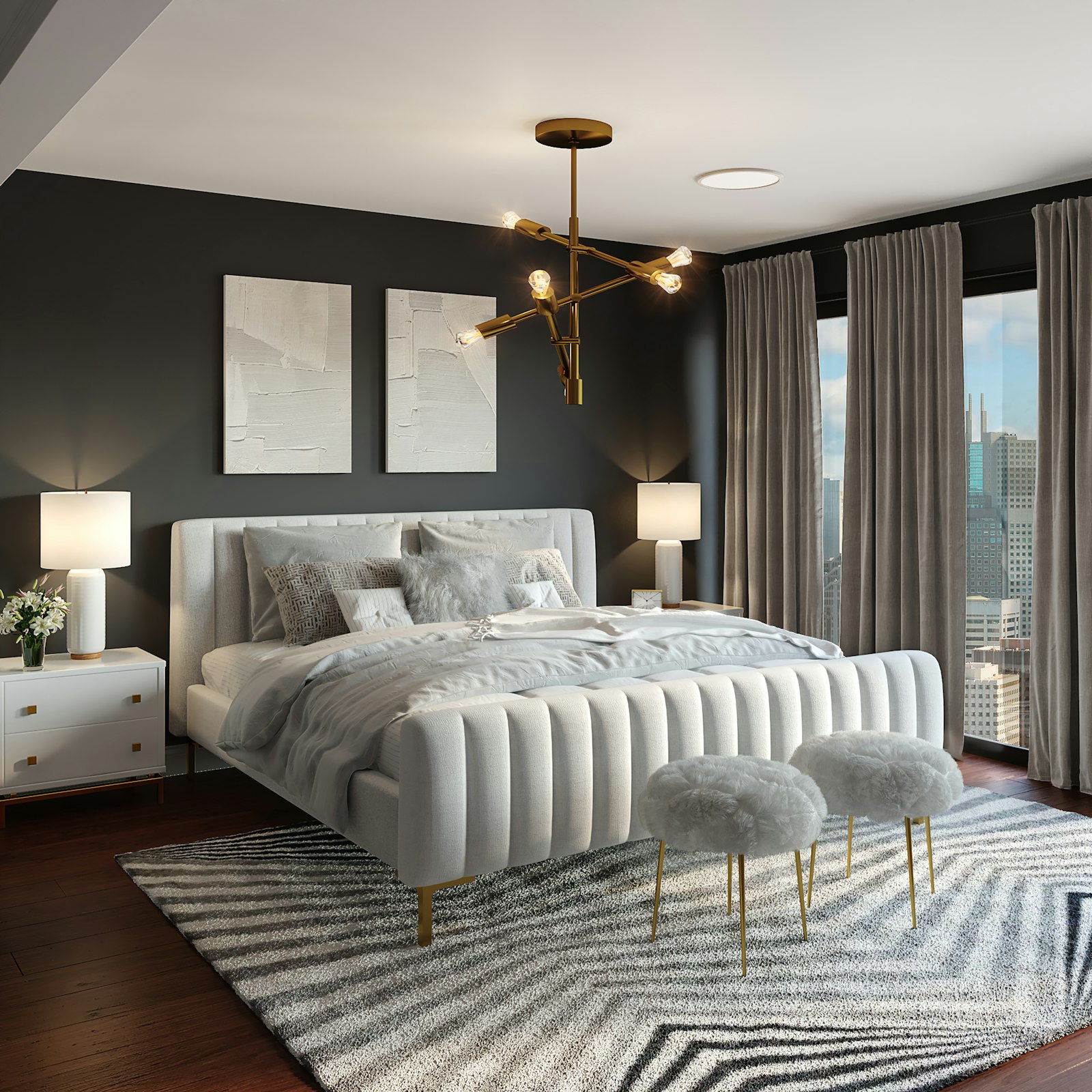
A bright bedroom reflects every streetlight, alarm clock, and early sunrise. Dark walls absorb those signals and help your nervous system understand that the day is truly over. Color becomes part of your sleep system.

Let the walls lean in
Many people fear that dark paint will make a bedroom feel like a cave. But bedrooms are one of the few rooms where enclosure is desirable. You want to feel held, not exposed, when you lie down.
Deep colors like charcoal, navy, or forest green make the walls feel closer in the best way. They create a sense of being wrapped up, which is exactly what relaxation asks for at the end of the day.

Layer darkness in three stages
Paint is only the first layer. The second is your windows. Blackout curtains or layered shades block the outdoor light that can interrupt deep sleep, especially in cities where the night never fully darkens.
The third layer is your bedding. Choose deep, matte tones in cotton, linen, or wool. Glossy fabrics and metallics reflect light, while matte materials absorb it and keep the room quiet.
Use one warm light source
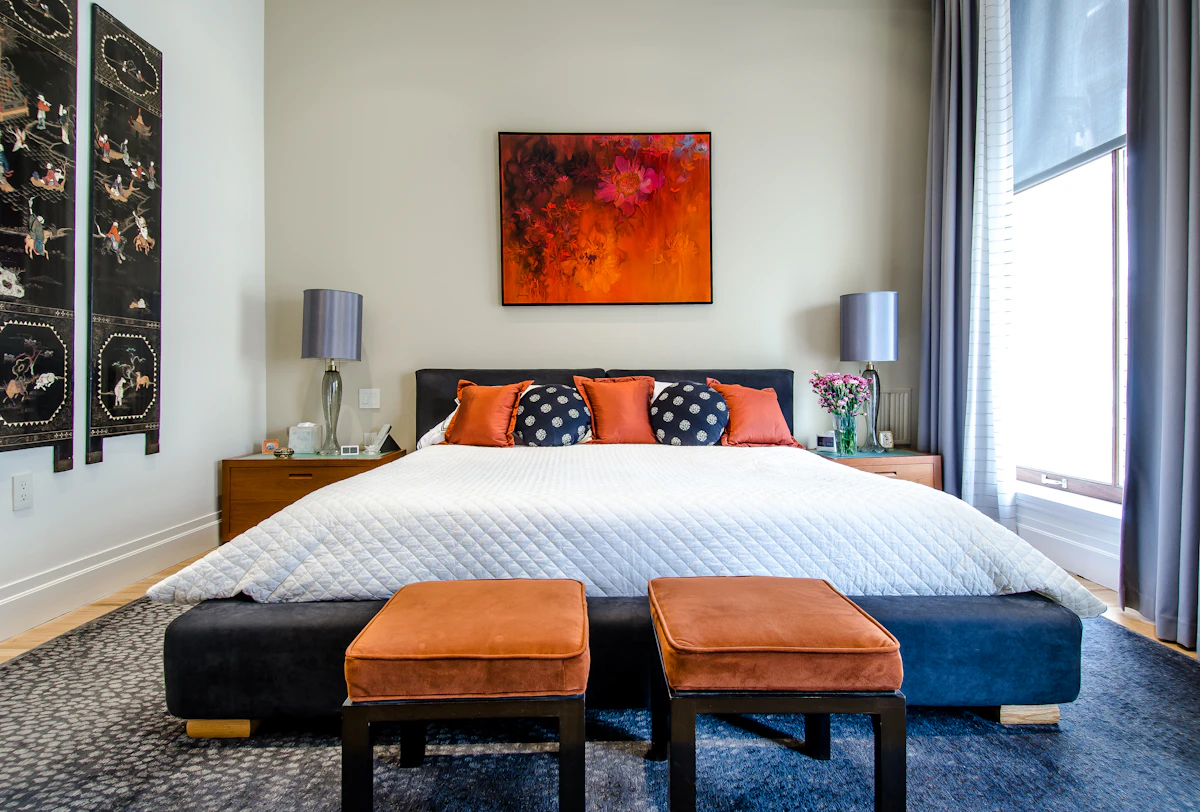
A dark bedroom still needs light, but only one kind. Choose a bedside lamp with a warm, dim bulb around 2200K. It gives enough glow to read without telling your brain the sun is up.
Place the lamp below eye level when you are lying down. Overhead light is the enemy of sleep. A low, warm source beside the bed keeps the room in evening mode and protects your melatonin.

Balance dark with natural materials
Dark walls can feel heavy if everything else is dark too. Light wood, woven textures, and soft linens add warmth and keep the room from feeling somber. They remind you that the space is still alive.
Think of it like a forest at dusk. The darkness is deep, but there is still life and texture in every layer. Wood grain, linen wrinkles, and wool softness all bring that balance into the room.

Plan the morning transition
A dark bedroom is wonderful at night, but you still need to wake up. Consider how the room will look in morning light. A sheer layer or a timed lamp can soften the transition from sleep to day.
Some people love opening the curtains to full daylight. Others prefer a gradual glow. Either way, design the room for both ends of the day, not just the middle of the night.

Make sleep the main event
Every choice in a dark bedroom should support rest. The color, the curtains, the bedding, and the light all send the same message: this is where the day ends. The room becomes a partner in your sleep.
When your bedroom becomes a sanctuary rather than a storage room or a second office, sleep becomes easier. The room does the work, and you simply arrive. That is the real promise of a dark bedroom at last.

Related reads
- Japandi Bedroom
- Moody Dark Walls: Add Drama Without Dimming the Room
- Soft Light Ideas: Make Your Home Feel Calm at Night
- The Japandi Bedroom That Actually Helps You Sleep
- Textured Calm Bedroom Ideas for Better Sleep
- A Calm Kids Room Without Plastic Brights
- Bedroom Color Schemes: 9 Calming Palettes for Better Sleep
- Bedroom Curtain Ideas: Soft Light, Privacy, and Style
Frequently asked questions
Will a dark bedroom make my room feel too small?
Bedrooms actually benefit from a sense of enclosure. Dark walls can make the room feel cozy and held, especially when balanced with warm materials and soft lighting.
What is the best color for a sleep-friendly bedroom?
Deep blue, charcoal, forest green, and warm brown all work well. Avoid bright, activating colors like red or orange near the bed.
Do I need blackout curtains in a dark bedroom?
They help significantly if streetlights or early sun disturb your sleep. Layering blinds with curtains blocks more light than either alone.
What kind of light is best for a dark bedroom?
Use a single warm, dim bedside lamp around 2200K. Avoid overhead lighting, and keep the source below eye level when you are lying in bed.