The Argument for Touch Over Color
Most bedroom makeovers begin with paint. People spend hours choosing the exact shade of blue, green, or taupe that will finally help them relax. Color matters, but it is not the strongest signal the bedroom sends. By the time you are trying to fall asleep, the lights are low and color has mostly disappeared. What remains is texture. The cool smoothness of cotton, the slight grain of linen, the fuzzy weight of wool. These are the sensations that guide the body toward rest.
The central question is worth repeating: Why does touch relax us more than appearance when we are trying to sleep? The answer begins with the fact that sleep is a physical process, not a visual one. The body needs to feel safe enough to lower its guard. Soft, natural textures send that signal. They remind us of warmth, shelter, and care. A perfectly styled bedroom with hard, synthetic fabrics can still leave the nervous system on alert.
A bedroom does not need to look beautiful. It needs to feel good. That sentence is not an excuse for neglecting design. It is a redirect toward the senses that matter most at night. When you slip into bed, the first message your skin receives sets the tone for the hours ahead. Rough, stiff, or clammy fabrics create friction. Soft, breathable, and layered fabrics create ease. The best bedrooms are designed for the dark.
Linen: The Fabric That Breathes
Linen has become almost synonymous with calm bedrooms, and for good reason. It is highly breathable, meaning it does not trap heat against the skin during warm nights. It also wicks moisture, which helps when humidity rises or when body temperature fluctuates during sleep. Unlike tightly woven cotton, linen has a loose structure that allows air to move freely. That movement creates a subtle cooling effect that many people describe as fresh.
The texture of linen is also imperfect in the best way. It wrinkles easily, and those wrinkles are part of its charm. A bed dressed in linen looks lived-in rather than staged. That visual softness translates into psychological softness. There is no pressure to keep everything crisp. The fabric invites you to collapse into it without ceremony.
Linen improves with washing. New linen can feel crisp or even slightly stiff, but after several washes it becomes supple and soft. This aging process is the opposite of fast fashion bedding, which tends to pill, thin, or lose shape. Choosing linen is a long-term decision. It rewards patience, which is itself a calming quality in a bedroom.

Wool, Cotton, and the Layering Game
A single texture rarely creates the depth that a calm bedroom needs. The best beds combine materials. Cotton percale sheets provide a smooth base. A linen duvet cover adds texture and breathability. A wool throw at the foot of the bed introduces weight and warmth for cooler evenings. Each layer serves a function, and together they create a tactile landscape.
Wool is especially useful because it regulates temperature. It can feel warm in winter and surprisingly cool in summer, thanks to the natural crimp in wool fibers that traps air. A lightweight merino or alpaca throw adds softness without bulk. Place it where your feet can reach it easily, or drape it over a chair for visual warmth.
Cotton remains the workhorse of bedding for a reason. High-quality cotton, especially long-staple varieties like Egyptian or Supima, becomes softer over time. Percale weave feels crisp and cool. Sateen weave feels smooth and slightly lustrous. Either can work in a calm bedroom as long as the thread count is honest and the finish is not overly treated. Avoid cotton that feels slick or coated. That coating often comes from chemical finishes that reduce breathability.
Why Soft Shapes Support Sleep
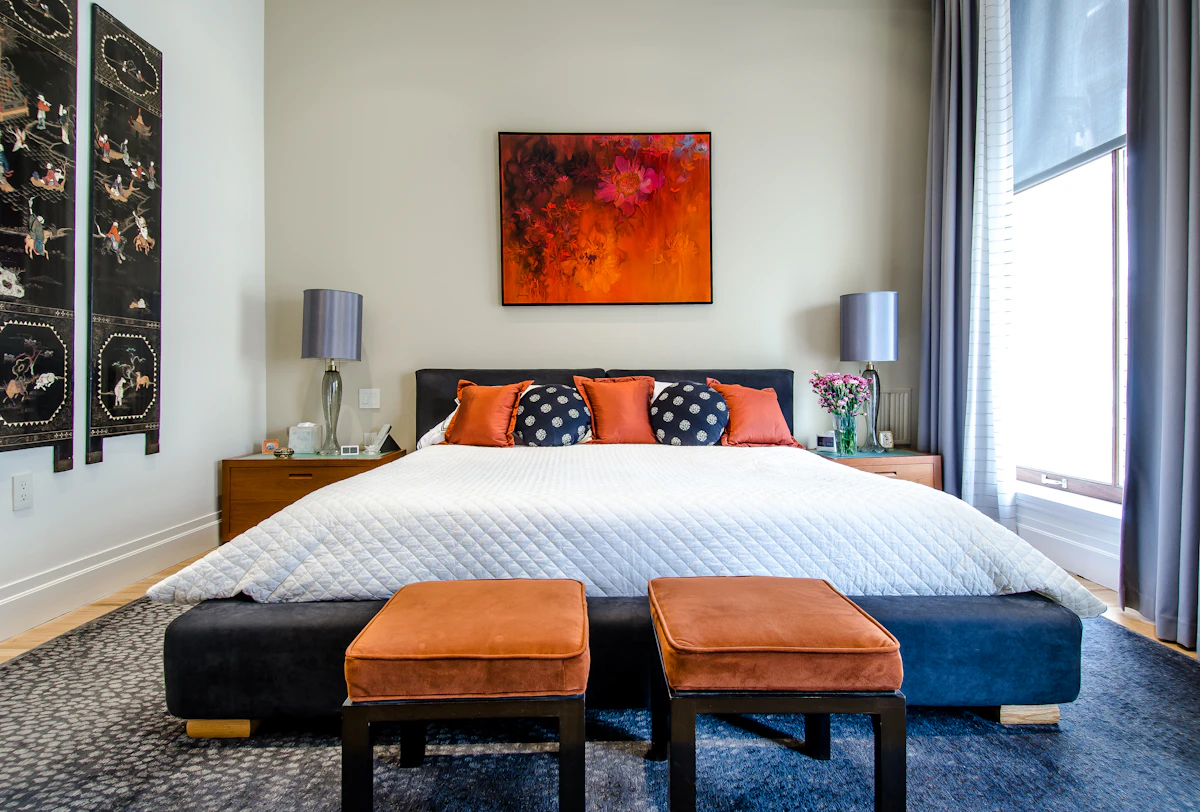
Texture is not only about fabric. It extends to the shapes and materials in the room. A rounded headboard, a curved bedside table, or a woven pendant shade all contribute to a softer environment. Sharp corners and glossy surfaces read as alert. Soft edges and matte finishes read as restful. The bedroom should be the most forgiving room in the house.
This is where texture connects to another design idea. The calming effect of curved forms is explored in our article on <a href="/reading/small-space/curved-furniture-small-space/">curved furniture in a small space</a>. While that piece focuses on living rooms, the principle applies equally to bedrooms. A curved bench at the foot of the bed or a round mirror above a dresser can reduce the visual tension that straight lines create.
The floor matters too. Stepping onto a cold, hard surface first thing in the morning or last thing at night is a small shock. A soft wool rug beside the bed, a braided cotton rug, or even a small sheepskin creates a gentler transition. The feet are sensitive. Treating them well is part of treating the whole body well.

Beyond the Bed: Textures That Surround You
The bed is the center of the bedroom, but it is not the whole story. Curtains, walls, furniture, and lighting all contribute to the tactile mood. Heavy linen curtains block morning light while adding weight and stillness to the room. A plaster or limewash wall has a subtle texture that catches candlelight beautifully. Even the choice of a ceramic bedside lamp rather than a metal one changes how the room feels at night.
Wood also belongs in a textured bedroom. A wooden bed frame, a live-edge nightstand, or a simple wooden bench introduces organic warmth. Wood pairs especially well with linen because both materials age gracefully. Neither demands perfection. Together they create a room that looks settled rather than styled.
For those interested in a more disciplined approach to calm sleep design, our guide to <a href="/reading/bedroom/japandi-bedroom-for-sleep/">the Japandi bedroom that actually helps you sleep</a> offers a useful companion. Japandi relies on restraint, natural materials, and visual quiet. Texture plays a central role in that restraint. Without it, minimalism can feel cold. With it, minimalism feels like a deep breath.

How to Layer Without Clutter
Layering textures can go wrong if it becomes busy. The goal is depth, not excess. Start with a neutral base. White, cream, oatmeal, or soft gray sheets create a quiet canvas. Add one or two textured layers in similar tones. A charcoal linen duvet over ivory cotton sheets reads as sophisticated rather than chaotic. A rust-colored wool throw on a beige bed adds warmth without overwhelming.
Limit patterns. If you use a patterned textile, let it be the only one. A simple stripe or a faded floral can work, but it should not compete with other visuals. Texture itself provides enough interest. A ribbed cotton blanket, a slubby linen pillowcase, and a nubby wool throw create a rich surface without a single print.
Pay attention to weight. A lightweight summer bed needs breathable, airy layers. A winter bed benefits from heavier, denser textures. Switching throws and duvet inserts seasonally keeps the room feeling appropriate. It also gives you a reason to refresh the space a few times a year, which prevents the bedroom from becoming invisible through over-familiarity.

Frequently Asked Questions
Q: Is linen bedding worth the investment?
A: For most people, yes. Linen lasts longer than standard cotton, becomes softer with washing, and regulates temperature well. The initial cost is higher, but the cost per use over five to ten years often compares favorably to cheaper bedding that needs replacing.
Q: How many textures should a calm bedroom have?
A: Aim for three to five distinct textures in a cohesive palette. For example, cotton sheets, linen duvet, wool throw, wood furniture, and a woven rug. More than that can feel busy. Fewer can feel flat. The key is variation within harmony.
Q: Can a textured bedroom still look modern?
A: Yes. Modern design does not require hard surfaces. Many contemporary interiors use natural textures as the main feature. Choose clean-lined furniture in wood or upholstered forms, keep colors restrained, and let the materials provide the visual interest.
Q: What is the best fabric for people who sleep hot?
A: Linen and percale cotton are excellent choices because they are breathable and moisture-wicking. Avoid synthetic fabrics and high-thread-count sateen weaves, which can trap heat. A lightweight wool blanket can also help regulate temperature surprisingly well.

Related reads
- The Japandi Bedroom That Actually Helps You Sleep
- Curved Furniture in a Small Space
- Sunday Reading Nook Ideas for a Calm Weekend
- Natural Wood Home Office Ideas for Calm Focus
- Linen Bedding for People Who Overheat at Night
- Why a Small Room Doesn't Need to Look Bigger
- DIY Floating Shelves: 7 Wall Storage Ideas
- Under Bed Storage Ideas: Hide Clutter and Free Up Space
Frequently asked questions
What is textures that calm a bedroom?
Why softness matters more than color
Why does textures that calm a bedroom matter?
Most bedroom makeovers begin with paint.
How do I start with textures that calm a bedroom?
Linen has become almost synonymous with calm bedrooms, and for good reason.
What is a simple tip for textures that calm a bedroom?
A single texture rarely creates the depth that a calm bedroom needs. The best beds combine materials.