One Rug, Many Stories
A vintage rug carries time in its fibers. Faded colors, worn patterns, and slightly uneven edges are not flaws. They are evidence of a life before your room. That history brings a depth that no new product can manufacture quickly.
A living room does not need matching furniture. It needs one thing with history. When everything else is new and coordinated, the rug becomes the soul of the space. It tells guests that a real person lives here.

Why Worn Feels Welcoming
Why does a worn rug make a room feel more personal than a brand new matching set? Because perfection can feel distant. A rug with some wear invites you to relax. You do not have to worry about the first spill or the hundredth footstep.
Worn rugs also soften acoustically. They absorb sound in a way that makes conversation easier. The room feels gentler underfoot and gentler to the ear. That appreciation of imperfection is at the heart of a <a href="/reading/style/wabi-sabi-living-room/">wabi-sabi living room</a>.
Building Around the Rug
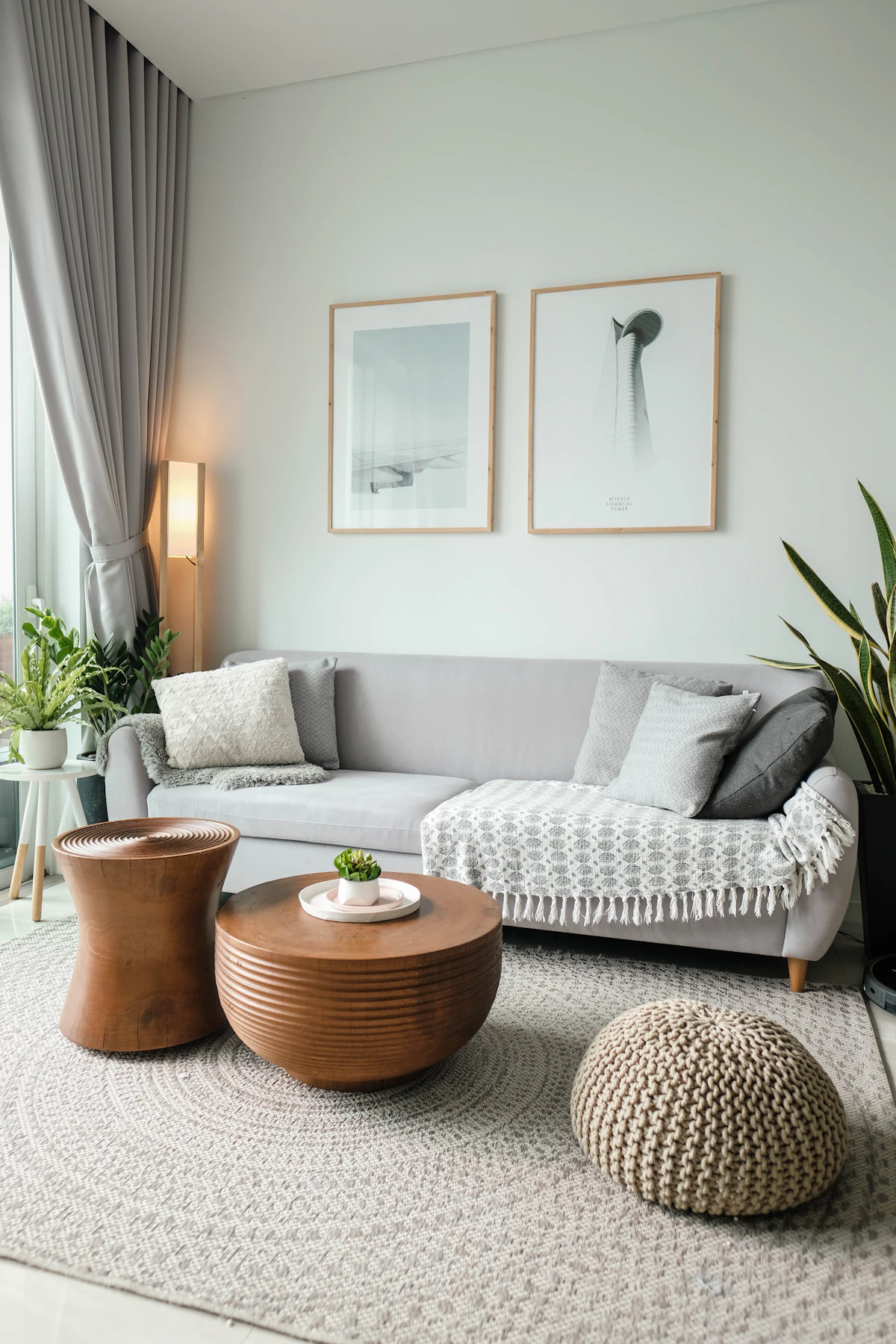
The easiest way to use a vintage rug is to let it lead. Pull one or two colors from its pattern for your cushions, throw, or curtains. Choose a sofa in a solid neutral that does not compete. Let the rug be the statement and keep everything else supportive.
If the rug has a bold pattern, resist the urge to add more pattern on the walls. A quiet backdrop lets the rug breathe. If the rug is faded and subtle, you can add more texture without overwhelming the eye.
Layering with Intention
Layering rugs can work beautifully with vintage pieces. A larger natural fiber rug underneath can frame a smaller vintage rug on top. This approach works well when the vintage piece is too small for the room or too precious to place directly on a high-traffic floor.
The key is contrast. Pair a low-pile vintage rug with a chunky jute base, or a soft wool piece over a flat weave. The layers should feel different underfoot so the combination feels purposeful rather than accidental.

Caring for Vintage Textiles
Vintage rugs are often more durable than they look, but they still benefit from care. Rotate them every six months so wear is distributed evenly. Vacuum gently without a beater bar, and blot spills immediately rather than rubbing.
If you love the collected look, a <a href="/reading/style/mix-old-new-furniture/">mix of old and new furniture</a> will extend the same principle beyond the floor. One meaningful old piece often grounds the entire room.

Frequently Asked Questions
Q: Are vintage rugs expensive?
A: Prices vary widely. Smaller pieces and worn rugs are often more affordable than pristine large ones. Estate sales, auctions, and reputable vintage dealers are good places to look.
Q: How do I clean an old rug?
A: Regular gentle vacuuming and immediate spot cleaning are usually enough. For deep cleaning, hire a professional who specializes in hand-woven or antique textiles.
Q: Can a vintage rug work with modern furniture?
A: Yes. The contrast between an old rug and a clean-lined sofa is often what makes the room feel interesting and personal rather than themed.

Related reads
Frequently asked questions
What is one vintage rug can ground a whole living room?
How a worn rug makes a room feel collected
Why does one vintage rug can ground a whole living room matter?
A vintage rug carries time in its fibers.
How do I start with one vintage rug can ground a whole living room?
Why does a worn rug make a room feel more personal than a brand new matching set?
What is a simple tip for one vintage rug can ground a whole living room?
The easiest way to use a vintage rug is to let it lead. Pull one or two colors from its pattern for your cushions, throw, or curtains.