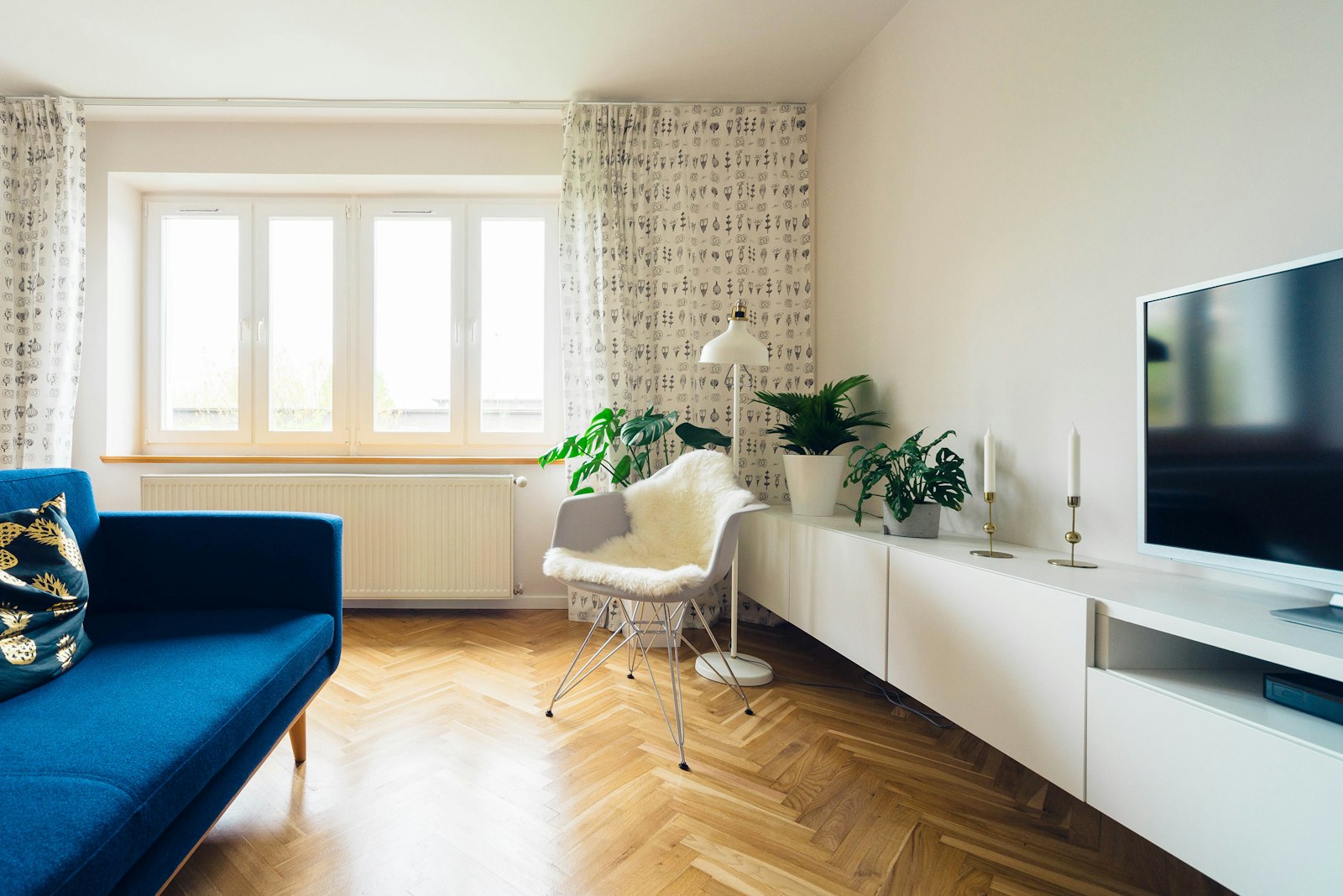
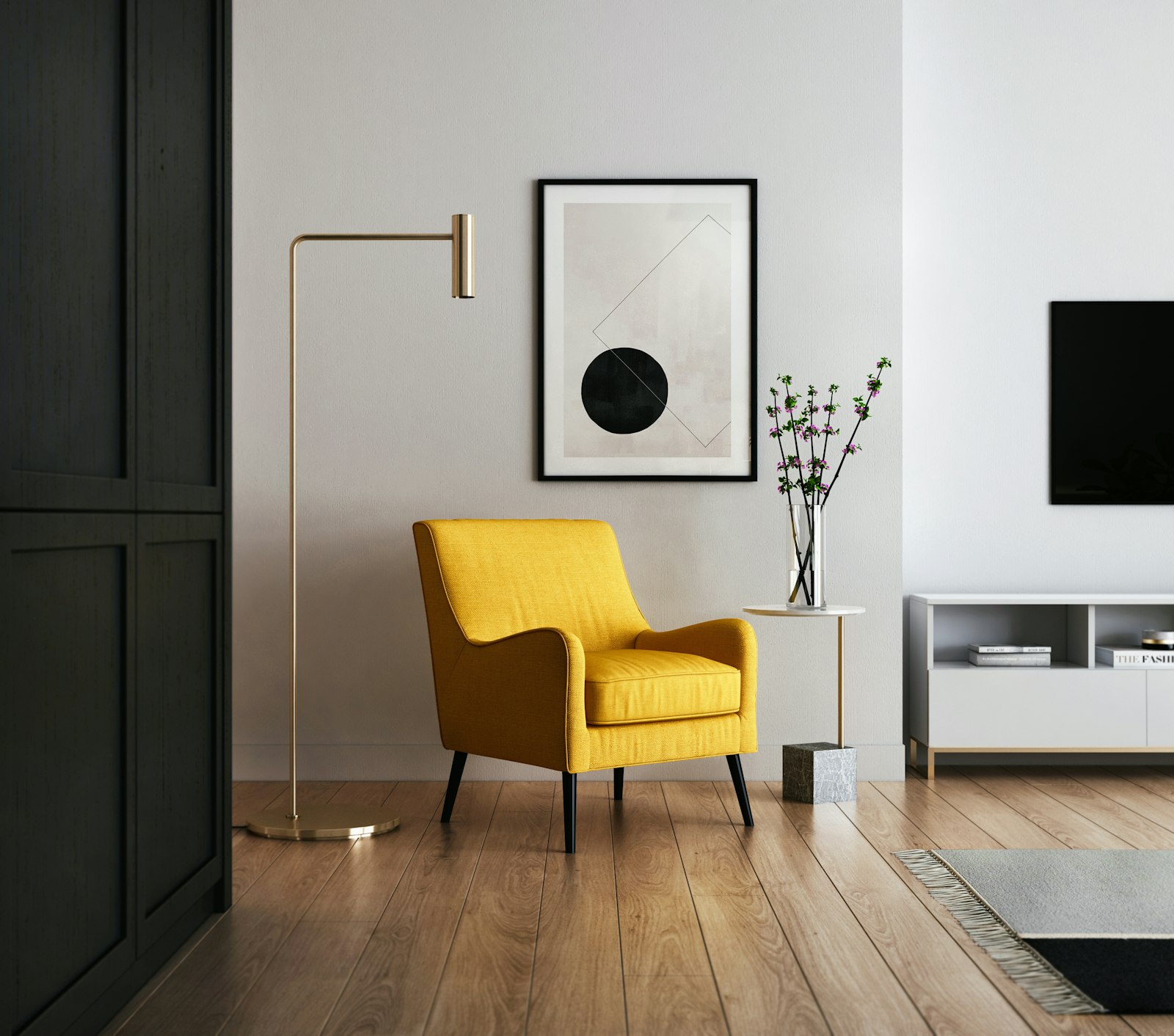
Why One Bold Wall Works
An accent wall is the easiest way to change the feeling of a room without repainting everything or buying new furniture. By focusing the drama on one surface, you give the eye a place to land while the rest of the room gets to stay calm.
The mistake most people make is choosing the wall behind the television or the busiest wall in the room. A better choice is the wall you see first when you enter, or the one behind a bed or sofa. That wall already has a natural role, so giving it extra presence feels intentional rather than random.
Color is the most common approach, but it is not the only one. Wallpaper, wood paneling, limewash, and even fabric can turn a flat wall into a moment. The key is to pick a treatment that relates to the rest of the room so the accent feels connected, not tacked on.

Paint Ideas That Feel Fresh
A single saturated color in a matte finish is still one of the best accent wall ideas because it is affordable and reversible. Deep navy, warm terracotta, olive green, and charcoal all add mood without making a room feel small.
For something softer, try a tonal approach. Paint the accent wall two shades darker than the other walls in the same color family. This creates depth without contrast that feels jarring, which is ideal for bedrooms and nurseries.
Geometric shapes are trending for good reason. A painted arch behind a bed, a half-wall color block, or a simple vertical stripe can give a room a designer feel with very little material. Use painter's tape, a level, and patience.

Texture and Pattern Options
Peel-and-stick wallpaper has made patterned accent walls accessible to renters and commitment-phobes. Botanical prints, grasscloth textures, and subtle stripes all add interest without requiring a professional installer.
Wood slats and board-and-batten bring architectural detail to rooms that lack molding. These treatments work especially well in bedrooms and entryways because they add warmth and shadow at the same time.
For a more industrial look, consider lime wash or Venetian plaster. The uneven surface catches light throughout the day, so the wall changes character from morning to evening. It is a quiet luxury that photographs beautifully.

Common Accent Wall Mistakes
The biggest error is treating the accent wall as an afterthought. If it clashes with the rug, sofa, or bedding, it will look like a patch rather than a plan. Choose the wall color or texture after the larger pieces are in place.
Another mistake is using high-gloss paint in a room with uneven walls. Every bump and dent will show. Matte and eggshell finishes are more forgiving and tend to look richer.
Finally, do not forget scale. A tiny pattern on a huge wall can feel busy, while an oversized motif can overwhelm a small room. Hold a sample up and step back before committing.

Design Notes to Remember
Every home is different, so adapt these ideas to your own space and lifestyle rather than copying them exactly.
Small changes often make the biggest difference in how a room feels day to day.
Start with what bothers you most, and build outward from there.
Good design is less about following rules and more about creating a space that supports how you live.
Take photos of your room from different angles to spot problem areas you might miss in person.
Related reads
Frequently asked questions
Which wall should be the accent wall?
Choose the wall you see first when entering, or the wall behind a major piece of furniture like a bed or sofa.
Do accent walls make a room look smaller?
Dark colors can make a wall feel closer, which actually adds coziness. In small rooms, keep the other walls light.
Are accent walls still in style?
Yes, especially when done with texture, tone-on-tone color, or architectural detail rather than a single bright color.