Mount the TV at Eye Level
The height of your television affects how the whole wall feels. When seated, the center of the screen should be at eye level, usually about forty-two inches from the floor. Mounting too high forces everyone to crane their necks and makes the TV dominate the room.
Use a full-motion mount if glare from windows is an issue. These let you angle the screen away from light during the day and push it flat against the wall when not in use. Just make sure the mount is rated for your TV's weight and size.
Before drilling, use painter's tape to outline the TV dimensions on the wall. Live with the outline for a day to confirm the height works from every seat. This small step prevents a costly mistake.
Frame It Like Art
One way to make a television feel less like a black hole is to treat it like artwork. A slim black frame around the screen, sometimes called a gallery frame, helps it blend into a gallery wall. Samsung's Frame TV popularized this idea, but simple trim can achieve a similar effect.
Match the frame finish to other metals or woods in the room. Black, natural oak, and white are the most versatile options. When the screen is off, it can display a static image or art instead of a blank black rectangle.
Keep the wall around the TV relatively quiet if you want the screen to read as art. Too many competing frames or patterns will make the display feel busy rather than intentional.

Build a Gallery Wall Around It
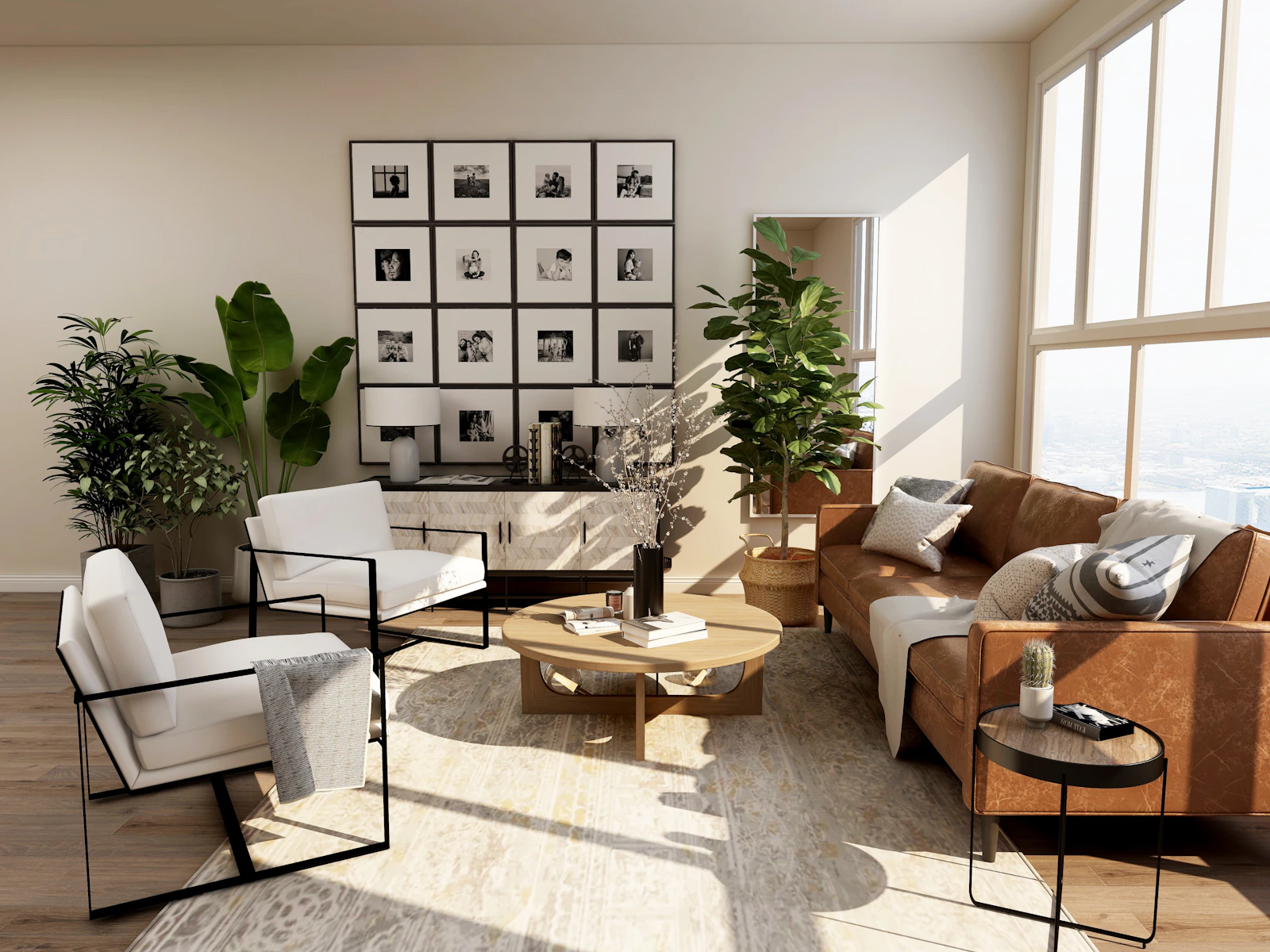
If you prefer the TV to recede, surround it with a gallery wall of framed photos and prints. The eye will travel across the entire arrangement instead of fixating on the screen. Use matching frames and mats for cohesion.
Leave a few inches of breathing room between the TV edge and the nearest frame. The screen needs space to feel like part of the composition, not an afterthought. A symmetrical layout around the TV tends to look more polished.
Mix in a few three-dimensional objects like small shelves or sculptural pieces to break up the flat frames. This adds depth and keeps the wall from feeling like a grid of rectangles.
Use a Low Media Console
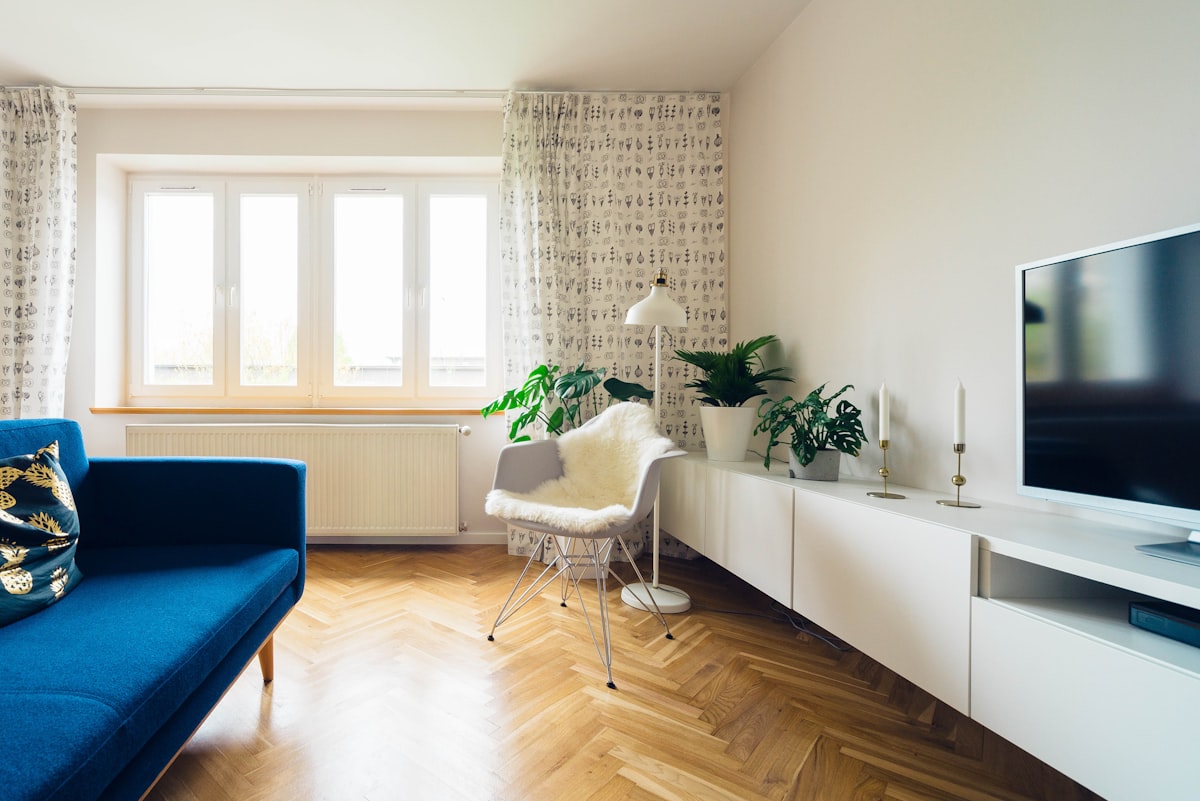
A low, wide media console grounds the TV and provides storage without competing for attention. Look for one that is shorter than the bottom of the screen when mounted. This keeps the visual weight low and the wall feeling open above.
Choose a console with closed storage for cables, remotes, and gaming equipment. A few open shelves can display books or ceramics, but too much openness leads to visual clutter. Drawers with soft-close hinges feel especially high-end.
If floor space is tight, consider a floating media console. It frees up floor area for a basket or a small plant and makes cleaning underneath easier. Just ensure it is securely anchored into wall studs.

Paint One Wall a Deeper Tone
Painting the TV wall a darker color is a designer trick that makes the screen disappear when it is off. Charcoal, navy, forest green, or warm chocolate all work. The dark tone recedes visually, so the wall feels deeper rather than flatter.
Keep the surrounding walls in a lighter shade to maintain balance. The contrast defines the TV area as an intentional feature rather than an awkward focal point. Satin or eggshell finishes reflect just enough light to keep the room from feeling cave-like.
If you are nervous about dark paint, try a deep wallpaper with a subtle texture. Grasscloth or a tone-on-tone pattern adds interest without making the screen harder to watch.
Hide Cords from Day One
Nothing ruins a clean TV wall faster than a tangle of black cords. Plan cable management before you mount the television. Use an in-wall cable kit for the sleekest look, or a paintable cord cover if you cannot open the wall.
Route power, HDMI, and ethernet cables together so they follow one clean path. Velcro ties keep cords from sagging behind the console. Label each cable at both ends so troubleshooting later does not become a guessing game.
For devices like gaming consoles or cable boxes, place them inside the console or in a nearby closet. An infrared repeater lets the remote work even when the box is out of sight. The result is a wall that looks calm even when the TV is on.

Balance the Wall with Symmetry
Symmetry brings order to a TV wall. Flank the screen with matching shelves, cabinets, or sconces to create a balanced composition. Even if the rest of your living room is eclectic, a symmetrical TV wall feels intentional.
You do not need perfect mirror images to achieve balance. Two similar-height elements on either side of the TV are enough. A tall plant on one side and a floor lamp on the other can feel just as balanced as matching bookcases.
Step back and squint at the wall to check the visual weight. If one side feels heavier, adjust the arrangement. The goal is for the TV to feel like one element within a larger, harmonious design.

Related reads
Frequently asked questions
How high should a TV be mounted on the wall?
The center of the screen should be at seated eye level, roughly forty-two inches from the floor. Higher mounting strains the neck.
How do I hide TV cords in a living room?
Use an in-wall cable kit, a paintable cord cover, or store devices inside a console. Velcro ties keep cables neat along the way.
Should a TV wall be an accent wall?
A darker accent wall behind the TV helps the screen blend in when off. Just balance it with lighter surrounding walls.
What furniture goes under a wall-mounted TV?
A low media console or floating shelf works best. It should be shorter than the bottom of the mounted screen for balanced proportions.